GUIDANCE
About CeraVe and its product story
CeraVe says the brand was developed with dermatologists in 2005 and launched in 2006. Its public product education highlights three essential ceramides—1, 3 and 6-II—and MVE delivery technology as part of the brand’s barrier-care story. These are useful formulation facts, but they should not be turned into a promise that every product has the same ingredient list or the same clinical use. Formulas, sizes and market labels can change, so the package in hand remains the practical reference.
CeraVe is now presented within L’Oréal’s Dermatological Beauty portfolio. French-language brand material uses the same ceramide and barrier vocabulary while adapting the regulatory and consumer context for the European market. That distinction matters for a batch page: brand history supplies context, while the exact product label supplies ingredients, warnings, responsible person and local language requirements.
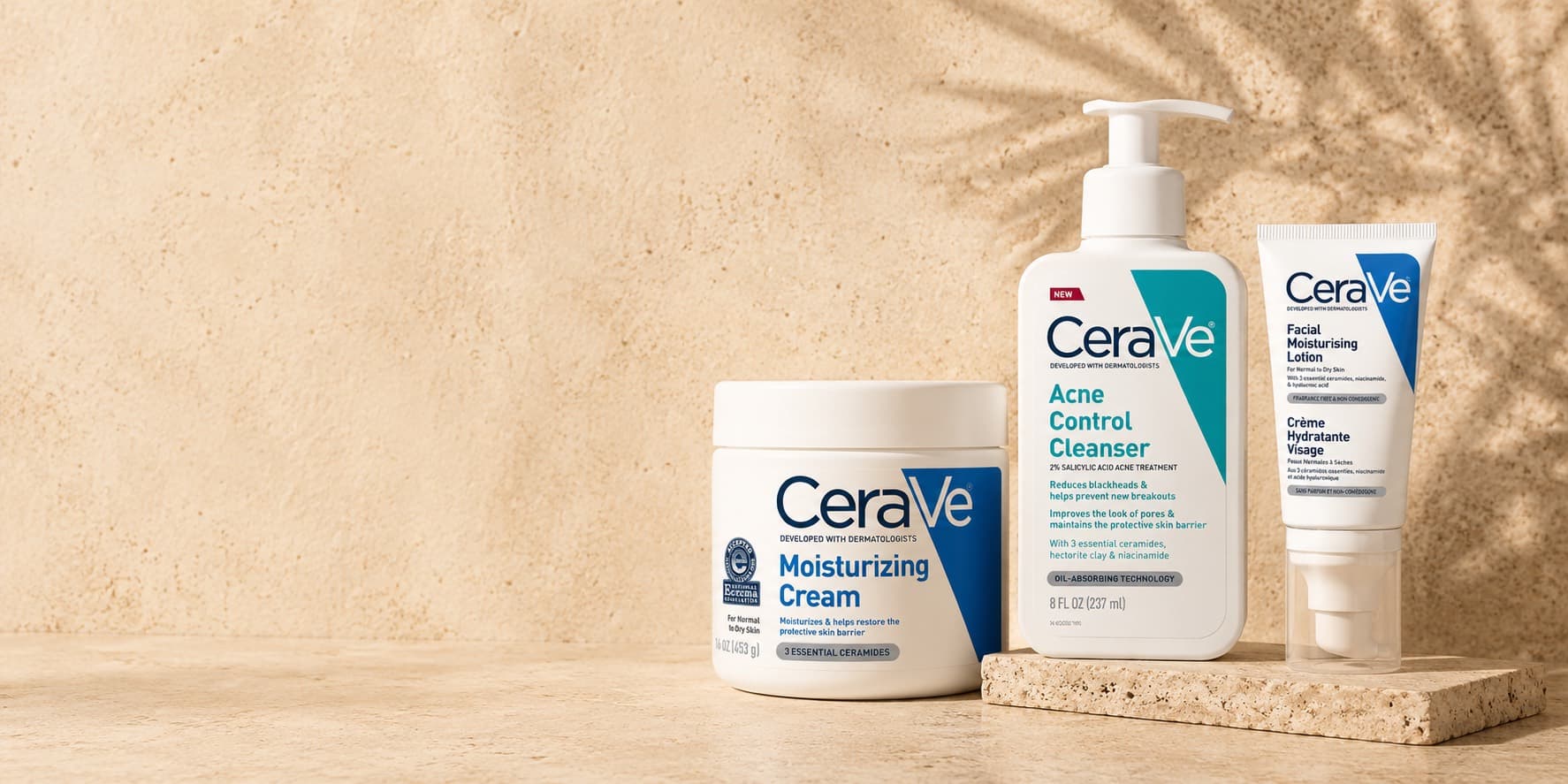
The brand’s familiar blue-and-white design is intentionally consistent, yet cleanser pumps, cream tubs, sunscreen tubes and travel sizes are not identical objects. A useful review therefore identifies the product category, volume, market and release before drawing conclusions from a photograph or a short mark.
FACT
Packaging details to inspect
Package inspection should follow the physical format. On a tube, begin at the sealed crimp and then check the rear label and carton. On a pump bottle, inspect the base, lower label, shoulder and pump collar without forcing the mechanism. On a wide-mouth tub, photograph the lid, rim, base and any inner seal that is present. These routes help a reader find a mark without claiming that one construction material or supplier is universal across CeraVe products.
Print quality is best judged by comparison with another unit of the same product and market: look for consistent logo spacing, readable ingredient text, clean barcodes, aligned labels and a closure that sits evenly. A faint mark may be a lighting or ink issue; a sharp mark may still be copied. Colour, smell, weight and texture are useful observations only when documented alongside the complete package and storage history.
Keep the original photographs at full resolution. Include the front, back, base, crimp, carton flap and barcode in one evidence set. Record size, language panel, seller and purchase date. This makes a later retailer or brand-service review much more useful than an isolated crop of the lot mark.
FACT
Storage and product-life context
CeraVe product life must be read from the individual package. The open-jar symbol communicates a Period After Opening and is different from an unopened shelf-life statement or a printed expiry date. European Regulation (EC) No 1223/2009 requires cosmetic labeling to communicate durability or the period after opening where applicable; United States guidance also explains that cosmetic shelf life depends on formulation, packaging, storage and use. Neither framework creates one universal number for every CeraVe cleanser, cream, sunscreen or treatment.
Store products closed and in the conditions stated on the label, away from prolonged heat, direct sun and repeated bathroom humidity. A change in smell, colour, separation or texture should be assessed as a condition and safety question, not used as a counterfeit shortcut. Sunscreen and treatment products deserve particular care because their labeled protection or active ingredients can be time-sensitive.
The checker can add production-period context when a supported mark is available. It cannot issue an expiry certificate. If the package has a printed date, an unusual seal, damage or a safety concern, preserve the item and ask the seller, pharmacist, dermatologist or CeraVe support for product-specific guidance.
GUIDANCE
What users compare and ask
If the checker returns no result, compare the entry with the package one character at a time. Recheck O/0, I/1 and B/8, and make sure the value is not the EAN/UPC, a product reference, the PAO value or a printed calendar date. CeraVe packages can present several short and numeric fields, so character count alone is not enough to identify the lot mark.
Retake the photograph under soft side light and include the full tube, pump, tub or carton panel before making a close crop. Note the exact product, size and market language. A clear unsupported mark may belong to a newer, older or regional format outside the current reader. Send the complete evidence set to CeraVe Consumer Care or the retailer, and submit the code photograph to CosmeticsBatch for format review.
GUIDANCE
A careful inspection workflow
CeraVe lifecycle guidance changes with the product category. For ordinary cosmetics, read the exact package's minimum-durability date, PAO symbol and storage directions. For a US sunscreen or acne treatment, check the labelled expiration date and drug facts because FDA requirements and product guidance differ from a basic moisturiser or cleanser. Do not transfer a duration from one category to another.
Record when the product was opened and keep pumps, caps and tube closures clean. Heat and direct sun are especially relevant to sunscreen storage; repeated bathroom humidity can also affect package condition. If the formula changes in smell, colour, texture or separation, stop using it and seek product-specific advice. The batch result supplies production-period context only when the mark's format is sufficiently supported.