FACT
About La Mer and its product story
La Mer’s official ingredient education describes Miracle Broth as a blend built around sustainably harvested Giant Sea Kelp, vitamins, minerals and other nutrients. The brand says the broth undergoes a three- to four-month fermentation process and presents it as central to Crème de la Mer and related products. This is La Mer’s formulation story, not a guarantee that every SKU has the same ingredients or the same performance.
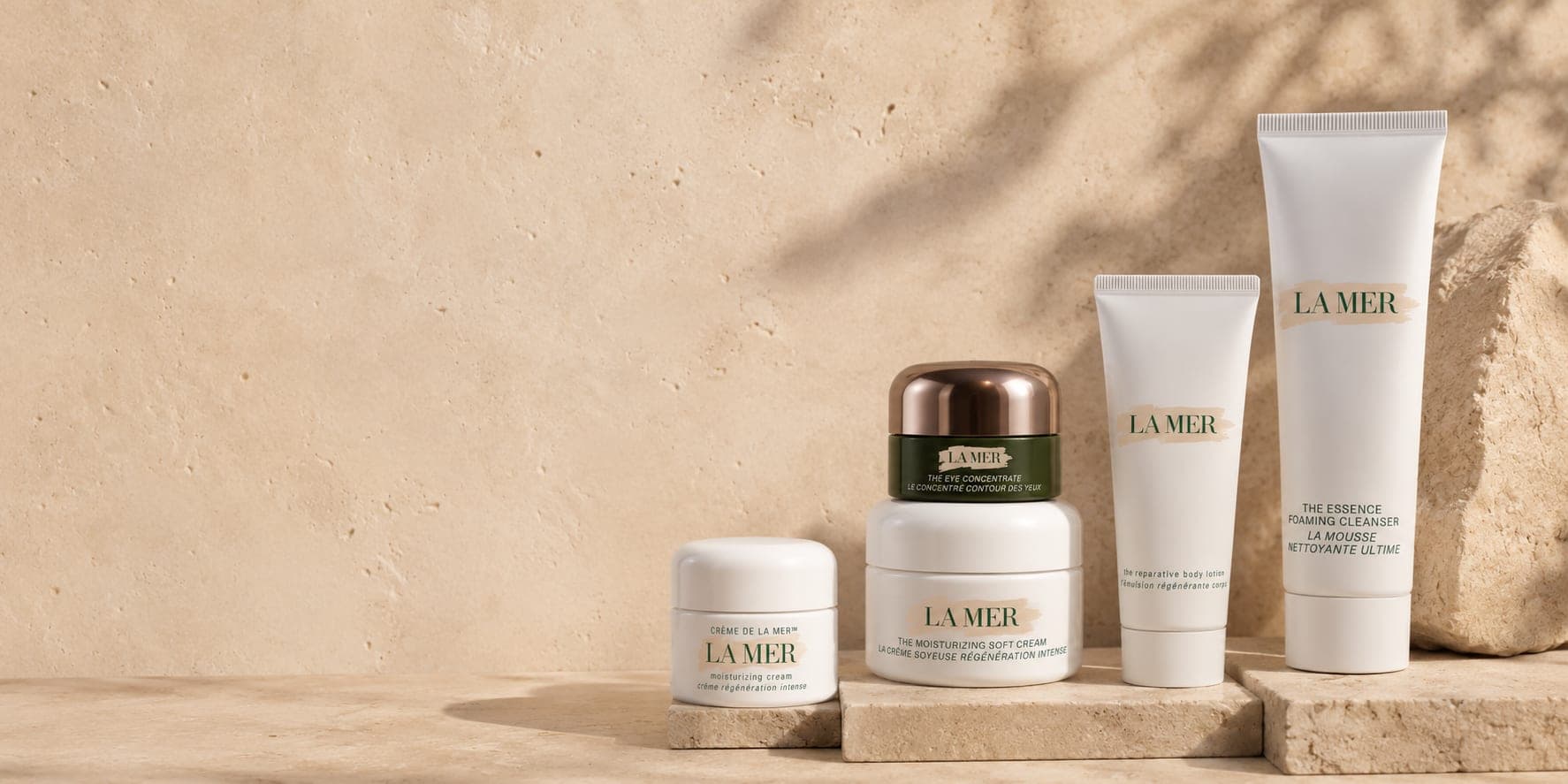
La Mer sits within the Estée Lauder Companies portfolio, but its jar, treatment, serum and makeup formats have distinct labels and use instructions. The familiar sea-green presentation should be treated as visual context only. Identify the exact product, size, market and release before comparing a code or package detail.
GUIDANCE
Packaging details to inspect
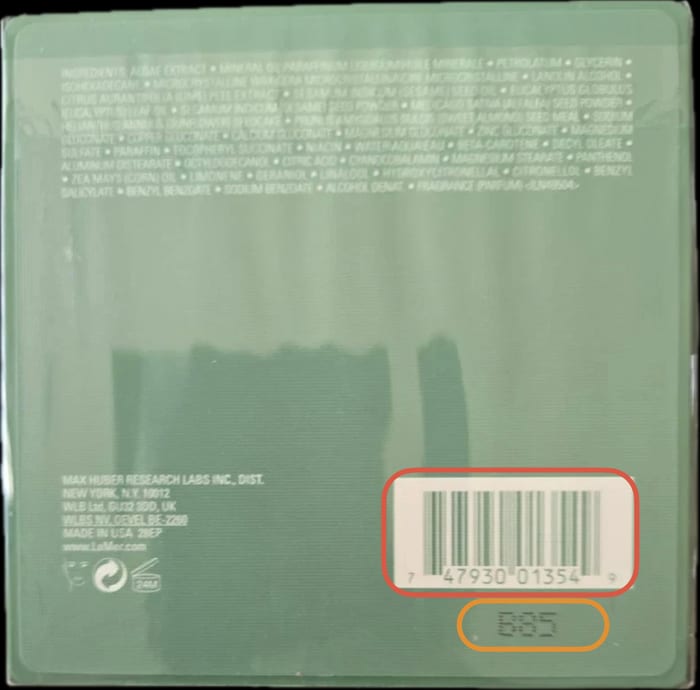
For a La Mer jar, begin with the underside label or base, then photograph the lid, rim, inner presentation and carton flap. For serums and eye treatments, include the bottle base and the bottom of the box. A short mark should be documented together with the product name, size and barcode so it is not confused with a retail identifier.
Users often compare jar weight, lid fit, label alignment, seal condition and the appearance of the cream. These observations can identify a damaged package or a reason to ask questions, but they are not proof of authenticity. Refills, travel sizes, regional cartons and packaging updates may differ from a current product photograph.
Keep the original carton and take side-lit photographs of faint print. Do not rely on smell, colour or texture alone: storage, temperature and formula changes can alter those features in genuine products.
GUIDANCE
Storage and product-life context
La Mer product life is controlled by the exact package. Read any printed expiry information, open-jar PAO symbol and storage instructions rather than applying one number to every cream, serum, eye treatment or makeup item. Keep the jar closed, away from heat and direct sunlight, and avoid repeated exposure to bathroom humidity.
A change in texture, odour or colour is a condition signal. It may result from storage, age, reformulation or contamination and cannot independently prove that a product is counterfeit. If irritation or contamination is suspected, stop use and seek professional advice. a production-period reading adds historical context only.
For an expensive skincare purchase, preserve the shipping carton and receipt. A damaged seal or product mismatch is easier for a retailer to investigate when the whole delivery record is available.
GUIDANCE
What users compare and ask
La Mer discussions frequently focus on empty jars resold online, different cream textures, plastic or marine odours and uncertainty about marketplace sellers. Recent community posts also show why a formula change and a bad batch can be confused with a counterfeit concern. These are valuable signals about what users struggle to assess, not authentication proof.
The practical checklist is to compare like-for-like size and product, inspect the base and carton together, record seller and purchase date, and document storage and opening history. Do not treat a matching code, jar weight or a familiar smell as decisive. A copied mark can look valid, while a genuine older formula can feel different from a current one.
This page keeps those observations on-page and labels them as community experience. It does not link the reader away or reproduce a decoder method.
GUIDANCE
A careful inspection workflow
A responsible La Mer review separates formulation story, package condition and authenticity. Miracle Broth information explains what the brand says about its products; it does not certify a jar. The package record should include the base, lid, seal, carton, barcode, lot mark, size, market language, seller and receipt.
When a product differs from an earlier purchase, record the exact difference—spread, odour, colour, seal, print or closure—and consider storage and release date before making an accusation. Contact the retailer or La Mer when evidence conflicts. If a safety concern exists, stop using the product.
The checker can provide manufacture-period context for a supported mark, but it cannot determine provenance or safety. Clear uncertainty, complete photographs and a documented purchase trail are more useful than a confident online authenticity label.
La Mer jars are often kept as decorative objects or resold empty, so a photograph of a beautiful container does not document the history of the cream inside it. Record whether the jar is sealed, partially used, refilled or empty, and never infer formula condition from the vessel alone.
For a premium skincare complaint, product category matters: a treatment serum, eye concentrate and moisturising cream may have different texture, opening and storage expectations. Match like-for-like products before comparing colour or scent, and preserve the receipt and shipping materials when the purchase came from an online marketplace.